



Theme parks around the world are racing to add VR attractions. The reason is simple: VR experiences deliver something traditional rides cannot — immersive, repeatable, and constantly updatable content that keeps visitors coming back.
But adding VR to a theme park is not the same as adding VR to a shopping mall arcade. Theme park visitors expect bigger, more spectacular, and more thrilling experiences. A single-seat VR simulator that works in a mall food court will be ignored in a theme park.
This guide is written for theme park operators, attraction designers, and investors who are evaluating VR equipment for large-scale venues. It covers what equipment categories matter, how to evaluate them, capacity and throughput considerations, cost expectations, and the strategic mistakes that waste capital without driving attendance.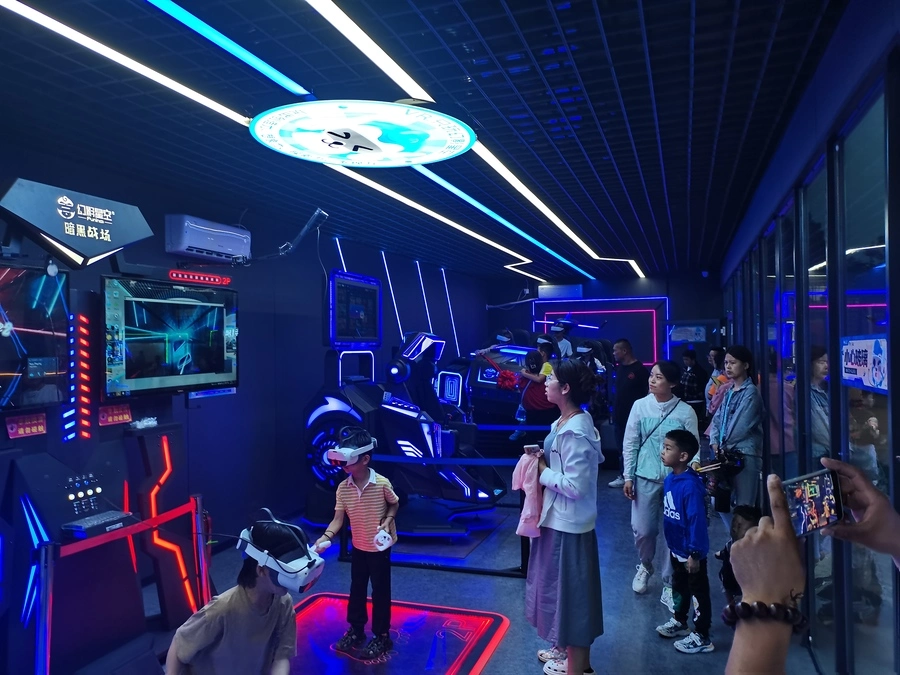
Why Theme Parks Need VR Attractions Now
Three forces are driving VR adoption in theme parks:
1. The Novelty Gap
Traditional roller coasters and flat rides have reached a plateau. Visitors have seen them before. VR offers experiences that are physically impossible — flying through space, diving into the ocean floor, surviving a zombie apocalypse — without the massive civil engineering of a new coaster.
2. The Content Refresh Problem
A $20 million roller coaster is fixed. Once visitors have ridden it, the only way to refresh the experience is to build something new. A VR motion theater can refresh its content with a software update — giving visitors a reason to return every season without eight-figure capital expenditure.
3. Space Efficiency
A traditional dark ride requires 2,000–5,000 square meters and a multi-year construction timeline. A VR attraction zone can fit in 200–500 square meters and be operational in 8–12 weeks. For parks with limited expansion space, VR is the highest-density attraction investment available.
VR Equipment Categories for Theme Parks
Not all VR equipment belongs in a theme park. Here is a breakdown by category, ranked by relevance to theme park operations:
Category 1: Large-Format VR Motion Theaters (Top Priority)
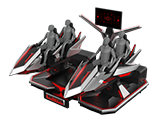
What it is: A multi-seat motion platform (10–30+ seats) where all riders share a synchronized VR experience. Think of it as a 21st-century simulator ride — but with VR headsets instead of a projection screen.
Why it works for theme parks:
· High throughput: 30–60 riders per hour depending on session length
· Visual spectacle: Large physical structure attracts attention from across the park
· Group experience: Families and friends ride together, which is critical for theme park social dynamics
· Content flexibility: Swap themes seasonally — Halloween horror in October, space adventure in summer
Capacity range: 10–30 seats per unit
Price range: $50,000–$120,000+ per unit
Footprint: 30–80 square meters per unit
Session length: 5–15 minutes (including loading/unloading)
Throughput: 40–120 riders per hour
Example: A 30-seat VR motion theater with a ship-style or theater-style seating configuration can process 200–400 riders per hour during peak operation — comparable to a mid-tier flat ride at a fraction of the footprint and cost.
Category 2: Multi-Seat VR Simulators (High Priority)
What it is: Motion-platform-based VR simulators with 2–6 seats, offering individual or small-group experiences. These are the workhorses of VR attractions.
Why it works for theme parks:
· Moderate throughput with premium pricing
· Variety of motion profiles (racing, flying, combat, underwater)
· Can be themed to match park IP or seasonal events
· Lower per-unit cost allows deployment of multiple units with different themes
Capacity range: 2–6 seats per unit
Price range: $12,000–$50,000 per unit
Footprint: 6–15 square meters per unit
Session length: 4–8 minutes
Throughput: 15–45 riders per hour per unit
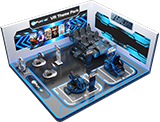
Deployment strategy: Place 3–5 units in a themed VR zone. Different units offer different experiences (racing, space, horror, family-friendly), giving visitors reasons to try multiple machines.
Category 3: VR Walking Platforms / Free-Roam VR (Medium Priority)
What it is: A physical arena where visitors wear VR headsets and walk freely in a virtual environment. Systems range from simple marker-based tracking to full omni-directional treadmills.
Why it works for theme parks:
· Highly immersive — visitors physically walk, duck, and interact
· Strong social media content (visitors moving in real life while seeing VR is visually compelling)
· Can support team-based multiplayer experiences (2–6 players simultaneously)
Capacity range: 2–6 players per session
Price range: $20,000–$80,000 per system
Footprint: 25–100 square meters
Session length: 10–20 minutes
Throughput: 6–18 players per hour
Caveat: Throughput is the lowest of all VR categories. Long session times and complex setup between groups mean this is best as a premium, limited-capacity experience rather than a high-volume attraction.
Category 4: Single-Seat VR Simulators (Low Priority for Theme Parks)
What it is: Individual VR motion chairs or cockpit-style simulators for one player.
Why it is low priority for theme parks:
· Low throughput (6–10 riders per hour)
· Not a group experience (theme park visitors come in groups)
· Looks small and underwhelming in a theme park context
· Better suited for mall arcades and FECs
If you must deploy them: Use as filler in queue lines or as upsell experiences, not as headline attractions.
Category 5: VR Slides / VR Coasters (Niche)
What it is: Adding VR headsets to existing water slides or roller coasters, synchronizing the visual experience with the physical motion.
Why it is niche:
· Requires existing ride infrastructure
· Synchronization technology is complex and still maturing
· Hygiene concerns with shared headsets on high-speed rides
· Best as an enhancement to existing assets, not a standalone investment
Equipment Evaluation Framework
When evaluating VR equipment for a theme park, use this 8-point framework:
1. Hourly Throughput
This is the most critical metric. Theme parks live and die by hourly capacity.
|
Throughput Range |
Role in Park |
|
100+ riders/hour |
Headline attraction — can anchor a zone |
|
50–100 riders/hour |
Major attraction — supports a themed area |
|
20–50 riders/hour |
Secondary attraction — complements main draws |
|
Under 20 riders/hour |
Premium/niche experience — limited deployment only |
Calculation: (Seats × 60 minutes) ÷ (session length + load/unload time). Always assume load/unload takes 2–3 minutes longer than the manufacturer claims.
2. Content Refresh Cycle
Ask the manufacturer:
· How many games/experiences are included at purchase?
· How often are new experiences released?
· What is the cost per new experience?
· Can experiences be custom-themed to the park's IP?
A VR theater with 5 experiences that never updates is a declining asset. A VR theater with quarterly content drops is a compounding asset.
3. Motion System Quality
· Electric 6-DOF: Best for theme parks. Smooth, quiet, precise, low maintenance.
· Electric 3-DOF: Acceptable for secondary attractions. Less immersive but lower cost.
· Hydraulic: Avoid for new installations. Noisy, high maintenance, fluid leaks are a liability in guest areas.
4. Headset Durability and Hygiene
Theme park operation means 8–14 hours of daily use, hundreds of different users per day.
Must-haves:
· Commercial-grade headsets (HTC Vive Pro, Pico Business, or equivalent — NOT consumer Meta Quest)
· Replaceable/machine-washable face pads
· UV cleaning station compatibility
· Quick-swap battery or tethered power (no mid-session battery deaths)
· IPD adjustment accessible to staff (not buried in menus)
5. Theming and Customization
Can the equipment's exterior be themed to match your park's aesthetic? A VR simulator that looks like an office chair with a headset will break immersion before the experience even starts.
Look for:
· Custom exterior panels and color schemes
· Integrated lighting that can sync with park-wide lighting systems
· Custom branding on the VR content itself (loading screens, in-experience signage)
· Physical theming elements (props, railings, queue theming)
6. Weather and Environmental Tolerance
If the VR attraction is outdoors or in a semi-enclosed space:
· Operating temperature range (critical for parks in hot or cold climates)
· Humidity tolerance
· Dust resistance for motion platform bearings and electronics
· Rain protection (even partial — for unexpected weather)
Most VR simulators are designed for indoor use. Outdoor deployment requires specific weatherization that not all manufacturers offer.
7. Staffing Requirements
How many staff are needed to operate one unit?
· 1 staff per unit: Efficient. Staff member loads riders, starts session, monitors, and unloads.
· 2 staff per unit: Acceptable for large theaters where simultaneous loading and unloading is needed.
· 3+ staff per unit: Problematic. Labor cost will eat into margins quickly at scale.
8. After-Sales Support
Theme parks cannot afford multi-day downtime during peak season. Evaluate:
· Spare parts warehouse location (same continent is ideal)
· Remote diagnostic capability
· Response time guarantee (24 hours minimum, same-day is better)
· On-site support availability for major issues
· Software update delivery method (remote push vs. USB stick)
Cost Planning: Real Numbers
Equipment Costs
|
Equipment Category |
Per-Unit Cost |
Zone Cost (3–5 units) |
|
Large VR motion theater (20–30 seats) |
$50,000–$120,000 |
$50,000–$120,000 (1–2 units) |
|
Multi-seat VR simulator (4–6 seats) |
$20,000–$50,000 |
$60,000–$200,000 |
|
VR walking platform |
$20,000–$80,000 |
$40,000–$80,000 (1–2 units) |
|
Single-seat VR simulator |
$3,000–$8,000 |
$12,000–$32,000 (filler) |
Total Project Cost Example: VR Zone in a Theme Park
A mid-sized VR zone with one large motion theater, three multi-seat simulators, and themed queue/decor:
|
Item |
Cost Range (USD) |
|
VR motion theater (1 unit, 20-seat) |
$60,000–$100,000 |
|
Multi-seat VR simulators (3 units) |
$60,000–$150,000 |
|
VR walking platform (1 unit) |
$30,000–$60,000 |
|
Theming and queue design |
$15,000–$40,000 |
|
Installation and commissioning |
$8,000–$20,000 |
|
Staff training |
$2,000–$5,000 |
|
Content licensing (year 1) |
$3,000–$10,000 |
|
Total |
$178,000–$485,000 |
Operating Costs (Annual)
|
Item |
Cost Range (USD/year) |
|
Electricity |
$2,000–$8,000 |
|
Headset replacement (every 12–18 months) |
$2,000–$10,000 |
|
Motion platform maintenance |
$3,000–$12,000 |
|
Content updates |
$3,000–$15,000 |
|
Staffing (2–4 FTE) |
$40,000–$120,000 |
|
Total |
$50,000–$165,000 |
Revenue Projection
Assume a VR zone with 5 attractions in a theme park with 500,000 annual visitors:
· VR zone capture rate: 15% of park visitors try at least one VR attraction = 75,000 riders/year
· Average ticket price: $8 (upsell from park admission)
· Annual gross revenue: 75,000 × $8 = $600,000
· Annual operating cost: ~$100,000 (mid-range)
· Annual net revenue: ~$500,000
· Payback period (assuming $300,000 investment): ~7 months
These are planning estimates. Actual results depend on park attendance, pricing strategy, and operational efficiency.
The 5 Biggest Mistakes Theme Parks Make with VR
Mistake 1: Buying on Price Alone
A $15,000 VR simulator that breaks down twice a month during peak season costs more than a $35,000 unit that runs reliably. Calculate Total Cost of Ownership over 3 years, not just purchase price.
Mistake 2: Ignoring Content Refresh
The #1 complaint from repeat theme park visitors about VR attractions is "it was the same as last time." If your VR theater runs the same 5 experiences for two consecutive seasons, it is effectively a declining asset. Budget for content refresh as an operational expense from day one.
Mistake 3: Underestimating Throughput Requirements
A VR attraction with 15 riders per hour will create 45-minute queues on busy days. Long queues for a short experience lead to negative reviews and complaints. Always calculate peak-hour demand and ensure equipment capacity exceeds it.
Mistake 4: Treating VR as a Side Attraction
If VR equipment is tucked away in a back corner with no signage, no theming, and no staff enthusiasm, visitors will skip it. VR attractions need to be integrated into the park's traffic flow and marketed with the same energy as traditional rides.
Mistake 5: Skipping Staff Training
A VR simulator operated by an untrained staffer delivers a worse experience than no VR at all. Staff must know how to:
· Properly fit headsets (wrong IPD = blurry = nausea = bad review)
· Select appropriate experiences for different age groups
· Handle motion sickness complaints
· Troubleshoot common technical issues in under 60 seconds
· Clean and sanitize equipment between every single session
VR Theme Park Equipment Checklist
Before signing any purchase contract, verify:
· Hourly throughput meets peak demand calculations
· Motion system is electric 6-DOF (or minimum 3-DOF for secondary attractions)
· Headsets are commercial-grade with replaceable face pads
· Content update frequency and cost is documented in writing
· Manufacturer provides spare parts within 7 days to your location
· Remote diagnostics are available
· Equipment can be themed to match park aesthetics
· Weatherization is adequate for your climate (if semi-outdoor)
· Staff training is included (minimum 3 days on-site)
· Warranty covers parts and labor for minimum 12 months
· CE/RoHS/ISO9001 certification is current and verifiable
Conclusion
VR is no longer experimental in theme parks — it is a proven attendance driver when deployed strategically. The key is matching equipment scale to park scale, prioritizing throughput and content refresh, and treating VR attractions with the same operational rigor as traditional rides.
A well-planned VR zone can deliver payback in under 12 months, drive repeat visits through seasonal content updates, and give your park a competitive edge that traditional rides alone cannot match.
Planning a VR attraction zone? FuninVR designs and manufactures large-format VR motion theaters and multi-seat simulators specifically for theme park deployment — with electric 6-DOF motion, commercial-grade components, and ongoing content support.
Contact FuninVR to discuss your theme park VR project